

Maritime AI Agents

Beyond Chatbots.
Into Intelligent Operations.

AI agents engineered for complex maritime workflows — combining adaptive reasoning, specialized capabilities, and controlled execution.

Engineered with ChordX™. Orchestrated through Dynamic DEP.

Why our approach is different

An AI Agent Should Do More Than Answer Questions.

Maritime operations demand more than fluent responses. They require context, judgment, coordination, and accountability.

We design AI agents around the operational problem — defining what information they can access, what decisions they can support, and what actions they are permitted to take.

  1. 01 /

    Problem-Driven

    Start with the real operational challenge, not a predefined agent architecture.

  2. 02 /

    Adaptive by Design

    Compose the workflow and required capabilities according to the task and changing context.

  3. 03 /

    Engineering-Led Control

    Use explicit boundaries, validation, evidence, and human oversight to keep consequential actions reviewable.

Built on domain knowledge

AI Needs to Understand Your Business Before It Can Act.

Maritime workflows depend on more than documents and data. They rely on business terminology, relationships, operating procedures, and rules.

We organize this knowledge into a lightweight, task-focused foundation that helps AI agents interpret information in context and support decisions with appropriate evidence.

  • 01

    Taxonomy

    What type is it?

    Business categories and terminology, such as document types, event types, and operational activities.

    • Document types
    • Event categories
    • Business terms
  • 02

    Ontology

    How is it connected?

    Entities, roles, relationships, and events that describe your business world.

    • Vessels & voyages
    • Companies & roles
    • Events & status
  • 03

    Rules

    What should happen?

    Contracts, SOPs, and approval requirements that guide decisions and actions.

    • Contract clauses
    • SOPs and procedures
    • Approval rules

Domain Knowledge Foundation

Context-Aware AI Agents

Observe · Communicate · Reason · Act

Specialized agent capabilities

Four Capabilities. Coordinated by Design.

Different tasks require different capabilities and levels of authority. Our architecture separates agent responsibilities into four complementary capability types.

  1. 01

    Observe Agent

    See What Matters.

    Access permitted information, retrieve relevant records, extract facts, and detect operational changes.

    Examples: Vessel reports, voyage updates, document evidence, and task status.

  2. 02

    Communicate Agent

    Turn Information into Clarity.

    Explain findings, request missing information, draft communications, and present evidence-linked results.

    Examples: Operational summaries, draft replies, and exception explanations.

  3. 03

    Reason Agent

    Evaluate Before Acting.

    Interpret context, assess alternatives, identify risks, and propose decisions using appropriate methods.

    Examples: Operational recommendations, risk evaluation, and decision proposals.

  4. 04

    Act Agent

    Execute Within Boundaries.

    Perform permitted workflow actions, coordinate follow-up steps, and update authorized systems when approval requirements are satisfied.

    Examples: Approved task creation, status updates, and controlled workflow execution.

These are capability and permission categories, not necessarily four independent AI models. Each workflow uses only the capabilities it needs.

The orchestration layer

Dynamic DEP.
Intelligence That Adapts.

Dynamic reasoning. Structured execution.

Maritime operations rarely follow a fixed script. New information arrives. Conditions change. Exceptions emerge. Decisions need to be revisited.

Dynamic DEP enables task-aware workflow composition and adaptation — organizing decision and execution steps according to operational context while preserving explicit controls.

Explore the DEP Framework

Operational Problem

PT / IT

Problem Understanding

Dynamic DEP

Orchestrator

Select and compose the required workflow

Illustrative DEP Chain

  1. Extract Information (E)Identify and structure relevant information.
  2. Detect Issues (E)Identify anomalies and required actions.
  3. Rank Priorities (D)Evaluate and prioritize alternatives.
  4. Generate Action Plan (E)Create structured, actionable recommendations.

Supporting Methods · SOMR Engine®

  • Simulation
  • Optimization
  • Machine Learning
  • Rule-Based Reasoning

Decision (D)Execution (E)

Nodes are dynamically composed according to the problem.

Control Gate

Evidence Check · Permissions · Human Approval

Execute Approved Actions (E)Perform authorized workflow steps.

Authorized Output

Feedback & Workflow Update. If new information changes the problem, the workflow can be reassessed and adapted.

DEP in Action — Shipping Operation AI Copilot

Incoming email

Bunkering Request – MV Example Star – ETA 30 May

FromPort AgentToOps Desk

Please confirm bunker requirements for the upcoming call. Revised ETA to follow after pilot booking.

Four engineering principles

  1. 01 /

    Adaptive Workflow Composition

    Select, organize, and revise workflow steps according to the problem, available evidence, and changing conditions.

  2. 02 /

    Specialized Capability Orchestration

    Combine the appropriate agent capabilities with simulation, optimization, machine learning, reasoning, and deterministic tools.

  3. 03 /

    Validation & Control

    Apply defined inputs, outputs, validation rules, permissions, and human approval requirements at critical points.

  4. 04 /

    Traceable Execution

    Preserve the evidence, intermediate decisions, validation outcomes, and execution records needed for review.

Not a fixed script. Not uncontrolled autonomy.

Adaptive intelligence. Controlled execution.

Engineered with ChordX™

Intelligence Is Composed, Not Improvised.

ChordX™ provides the engineering framework for translating real-world problems into structured, testable decision systems.

The result: AI systems designed around operational needs rather than model capabilities alone.

Explore ChordX™
  1. PT / IT

    Understand the Problem

    Define the operational problem, human interactions, expected outcomes, and decision requirements.

    Learn more
  2. Dynamic DEP

    Organize the Execution

    Compose decision and execution nodes with explicit responsibilities, interfaces, validation, and control boundaries.

    Learn more
  3. SOMR Engine®

    Apply the Right Intelligence

    Combine Simulation, Optimization, Machine Learning, and Reasoning where each method adds measurable value.

    Learn more

Built for real maritime workflows

From Operational Complexity to Coordinated Intelligence.

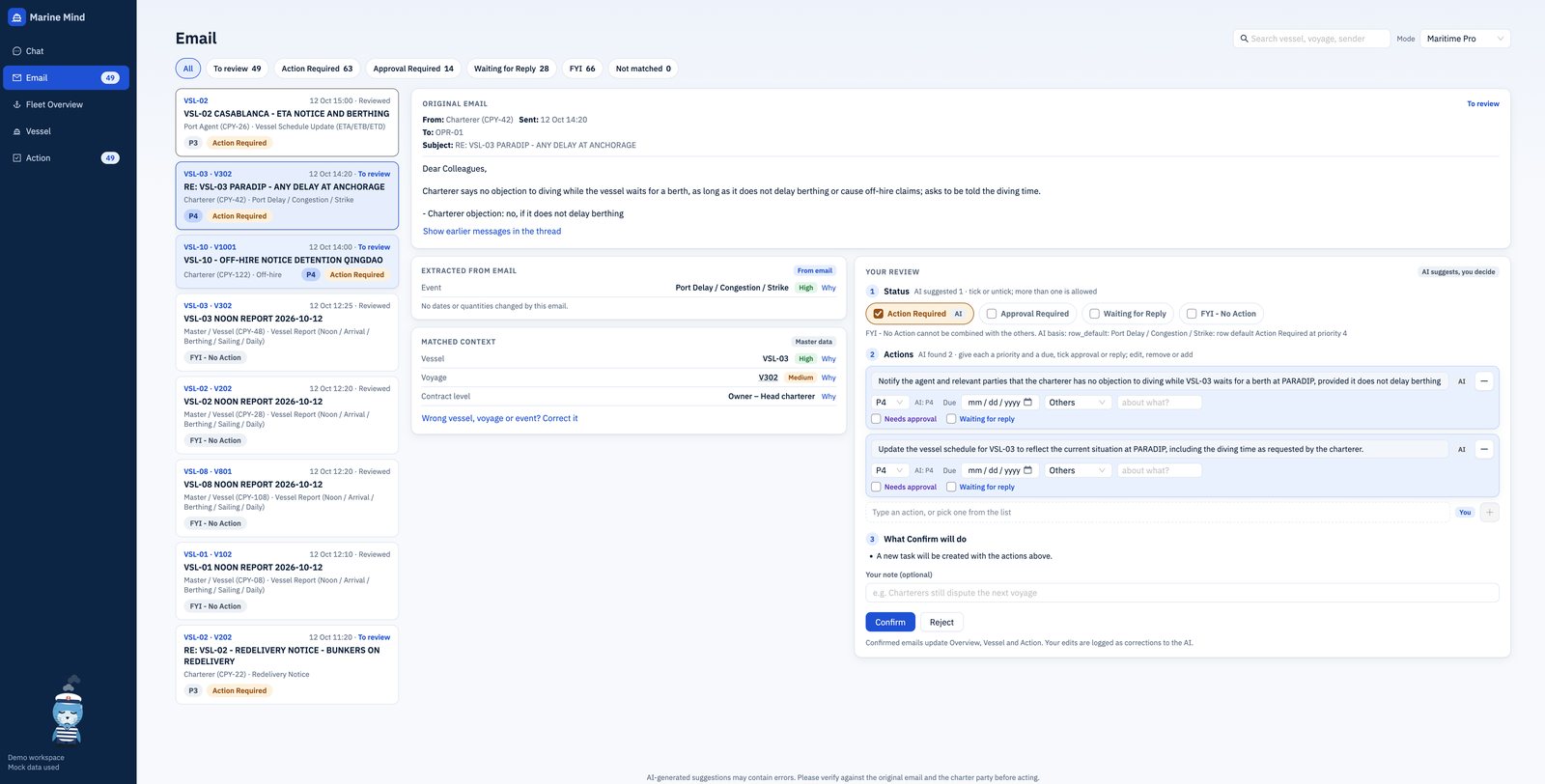
Vessel Operations Intelligence: demonstration screenshot

01 / Vessel Operations Intelligence

From Incoming Emails to Actionable Workflows.

Turn vessel communications and operational reports into structured information, linked tasks, and follow-up actions. Help operators identify exceptions, track outstanding steps, and maintain visibility across multiple vessels.

Explore Maritime Ops Inbox
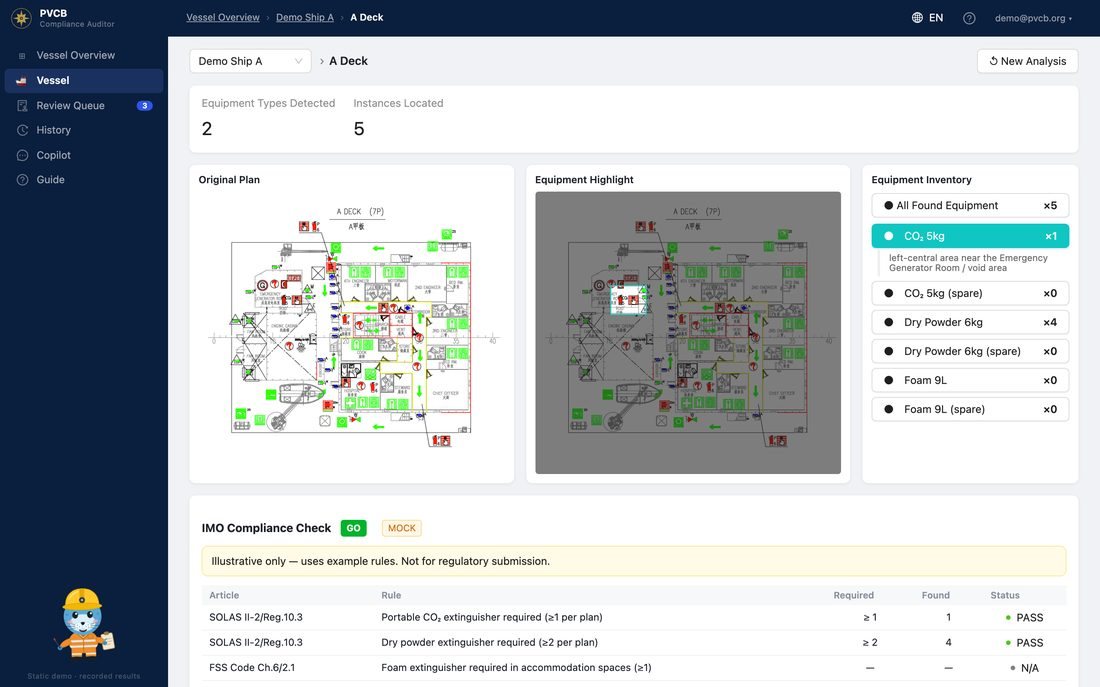
Document & Compliance Intelligence: demonstration screenshot

02 / Document & Compliance Intelligence

From Complex Documents to Evidence-Linked Review.

Combine information extraction, visual analysis, rule-based checks, and human verification to support maritime document and technical review.

Explore Ship Plan Compliance Auditor
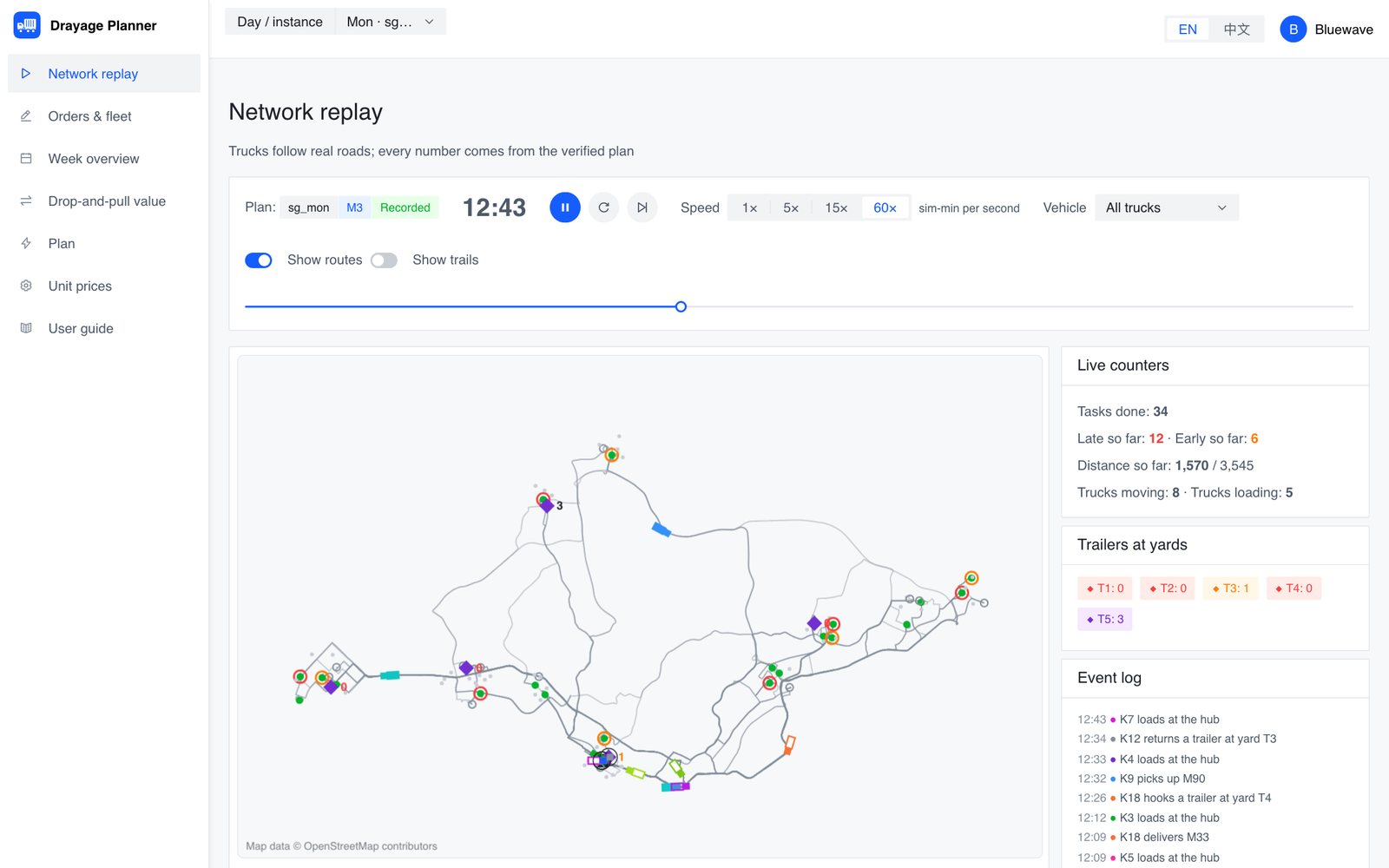
Commercial & Operational Decision Support: demonstration screenshot

03 / Commercial & Operational Decision Support

From Data and Scenarios to Defensible Decisions.

Combine domain knowledge, deterministic calculations, simulation, and optimization to evaluate alternatives and support operational or commercial decisions.

Explore Our Decision Systems

Demonstrations use synthetic or authorized data. They illustrate parts of this architecture; they are not presented as full implementations of every capability described above.

Engineered for accountability

Human Judgment Stays in Control.

AI agents should reduce operational workload without creating uncontrolled decisions. Our engineering approach prioritizes explicit permissions, evidence-linked outputs, validation, traceability, and human review for consequential actions.

  • Evidence-Linked Outputs
  • Defined Permissions
  • Validation & Exception Handling
  • Human Approval Gates
  • Traceable Decisions

Intelligent enough to adapt. Structured enough to trust.

Let's build together

Your Maritime Challenge. Our Next Intelligent Workflow.

From operational bottlenecks to complex decisions, let's explore how a purpose-built AI agent can support your team.