
The Challenge
A vessel can lose days waiting at anchor if it arrives at a congested port at full speed. Operators need to know which ports are under pressure, how long ships are waiting, and how that is changing, before they decide how fast to sail.
AIS positions contain this information, but only after vessel tracks are turned into port events: arrivals, berthing and departures.
Why Our Solution Is Different
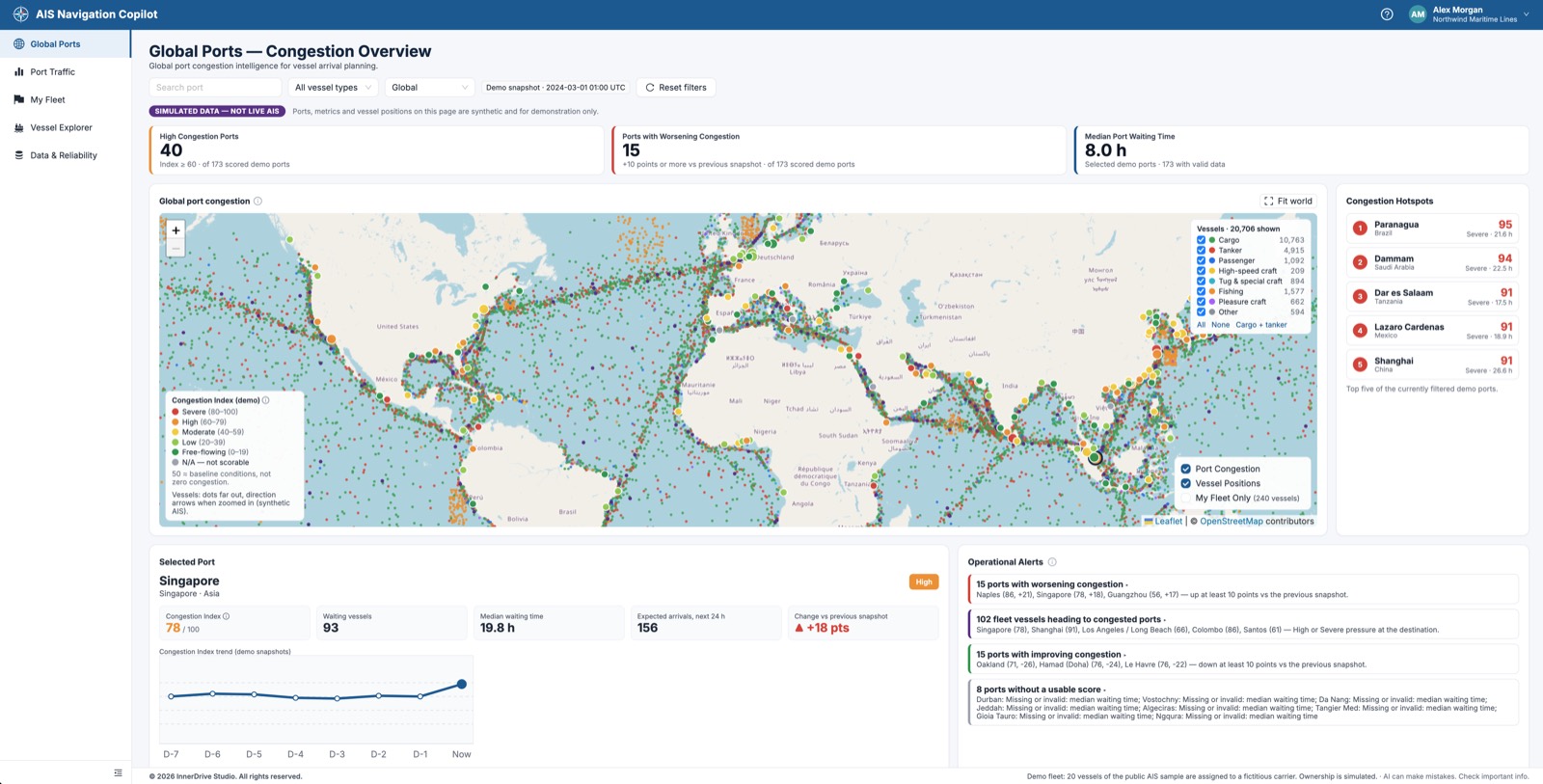
Global Port Congestion Overview
- A congestion index per port, from free-flowing to severe, with waiting vessels, median waiting time and expected arrivals in the next 24 hours
- Trend against previous snapshots, so worsening and improving ports stand out
Know where the queues are.
Operational Alerts for the Fleet
- Lists fleet vessels heading to ports under high or severe pressure
- Shows which ports have no usable score and why, instead of guessing
Alerts with the reason attached.
From Vessel Tracks to Port Events
- Identifies approach, berthing and departure events from AIS tracks
- Arrival and departure estimates are shown with their measured limits, not as guarantees
Evidence before prediction.
Speed Optimization (in development)
- Next step: compare keeping the current speed, slowing down, or targeting an arrival time, with the resulting time to the port approach and relative fuel use
- Designed as a planning simulation, not a navigation instruction
Arrive when the berth is ready, not before.
Status
The port congestion overview is live. Speed and fuel optimization is in development and will be added to the same demo.
Demonstration on simulated AIS data and synthetic port metrics. Not live tracking and not a navigation or commercial recommendation.